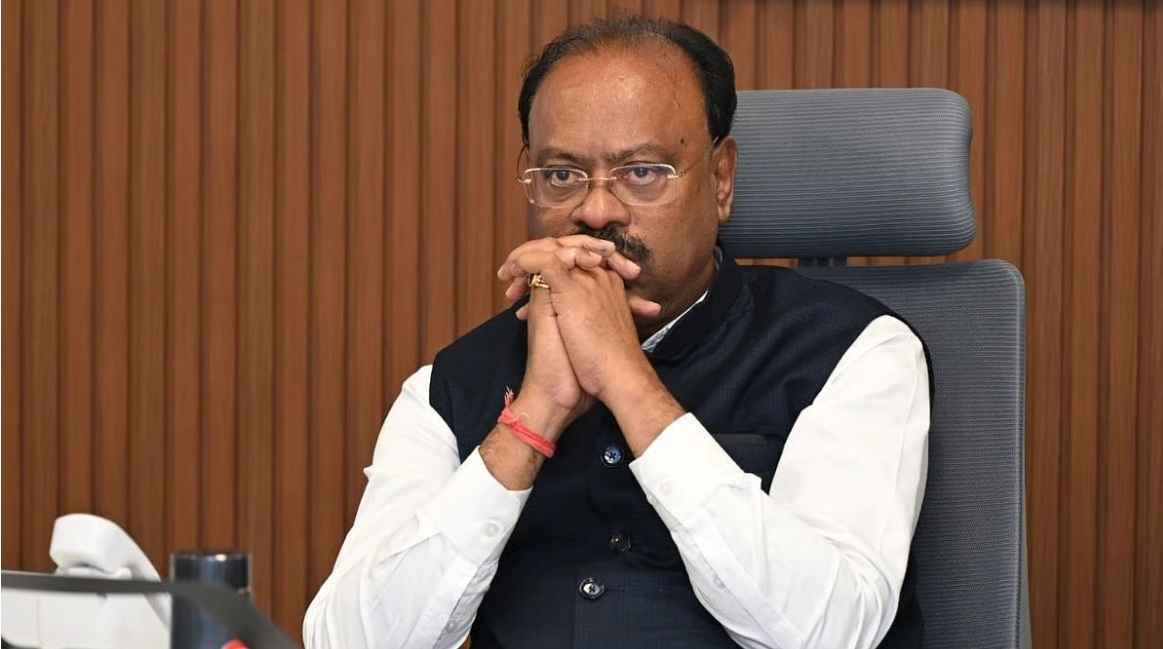
Amid drought-like conditions in the state, Revenue Minister Chandrashekhar Bawankule has directed that all rural and urban water supply schemes shut down over pending electricity bills or missing transformers be restarted immediately. He also said tankers should be the final option for villages facing scarcity. Before that, authorities must take every other step, including acquiring wells and strengthening local water sources.
He made the remarks at an important meeting of the cabinet sub-committee on drought, held at the Sahyadri Guest House. Collectors were directed to submit detailed drought relief proposals for their districts within the next 15 days, so that the Chief Minister can send them for approval.
Using 15th Finance Commission funds for power bills Water supply schemes should not stay shut only because of unpaid electricity bills. The ministers suggested the following financial steps:
Fund use: Districts should first use funds received from the 15th Finance Commission to clear pending electricity bills.
One-time settlement (OTS): In other districts, pending bills should be cleared through the one-time settlement scheme.
Transformers: Where schemes have stalled because a transformer burnt out or is unavailable, Mahavitaran and the Energy Department should install a transformer immediately and restore power.
Short and long-term steps to tackle water scarcity The orders stress preventive measures before the situation worsens:
Well acquisition and repairs: Private wells that still have water should be acquired immediately. Non-functional handpumps should be repaired on a war footing.
Speeding up incomplete schemes: Water supply schemes that are 75 to 80 per cent complete should get the remaining funds and be commissioned quickly.
GPS and app for tankers: If tankers have to be deployed for unavoidable reasons, a tanker app and GPS tracking system will be mandatory to keep water distribution transparent.
Use of CSR funds: The Chief Secretary has been asked to hold a meeting with the concerned bodies so that the corporate social responsibility funds of various companies can be used for water conservation work in drought-hit areas.
Local fodder production instead of cattle camps The sub-committee said it does not expect cattle camps to be needed until December, given the current situation. It has, however, directed preparations for possible scarcity:
Short-duration crops: Farmers should be encouraged to grow fodder crops that mature quickly and need less water, and minimum rates for fodder crops should be fixed.
Collector-led committee and SOP: Fodder production will be overseen by a committee headed by the Collector. The Agriculture Department will be the executing agency, and the Animal Husbandry Department will act as the monitoring agency. A separate standard operating procedure (SOP) covering fodder cultivation through distribution will be finalised within a week, in coordination with the Rural Development Department.
Inter-district supply: Fodder should be sent from the Konkan districts of Sindhudurg, Ratnagiri and Raigad, which have plenty of paddy straw, to neighbouring districts hit by scarcity.
Silt-deposit land: Fodder should be grown on silt-deposited land near forest department areas, dams and lakes, and women's self-help groups should be given priority for this work.
Final drought proposal to the Centre by end-October Vinita Ved Singhal, Additional Chief Secretary, Relief and Rehabilitation Department, told the meeting that surveys and panchnamas under the Trigger-1 and Trigger-2 criteria, being carried out by the Agriculture Department in 305 talukas across the state, will be completed soon. Based on this objective report, the final proposal for drought funds will be sent to the Centre by the end of October.
Chief Secretary Rajesh Agarwal said orders will be issued to release funds for drought relief, repairs and water schemes through the District Planning Committee (DPDC).
Ministers and senior officials present Members of the cabinet sub-committee and senior officials attended the meeting in large numbers:
Cabinet members: Disaster Management Minister Girish Mahajan, Agriculture Minister Dattatray Bharne, Relief and Rehabilitation Minister Makarand Jadhav Patil, Animal Husbandry Minister Pankaja Munde, Water Supply Minister Gulabrao Patil, Soil and Water Conservation Minister Sanjay Rathod, Cooperation Minister Babasaheb Patil, Fisheries and Ports Minister Nitesh Rane, Rural Development Minister Jaykumar Gore and Minister of State Adv. Ashish Jaiswal.
Administrative heads: Chief Secretary Rajesh Agarwal; Additional Chief Secretaries Abha Shukla (Energy), Manisha Mhaiskar (Home), Vikas Kharge (Revenue), Vikas Chandra Rastogi (Finance) and Parag Jain-Nainutia (Water Supply); Principal Secretaries Eknath Dawle (Water Resources) and Praveen Darade (Cooperation); Agriculture Secretary Parimal Singh; Animal Husbandry Secretary N. Ramaswamy; Rural Development Secretary Dr Chandrakant Pulkundwar; and Soil and Water Conservation Secretary Jitendra Papalkar.