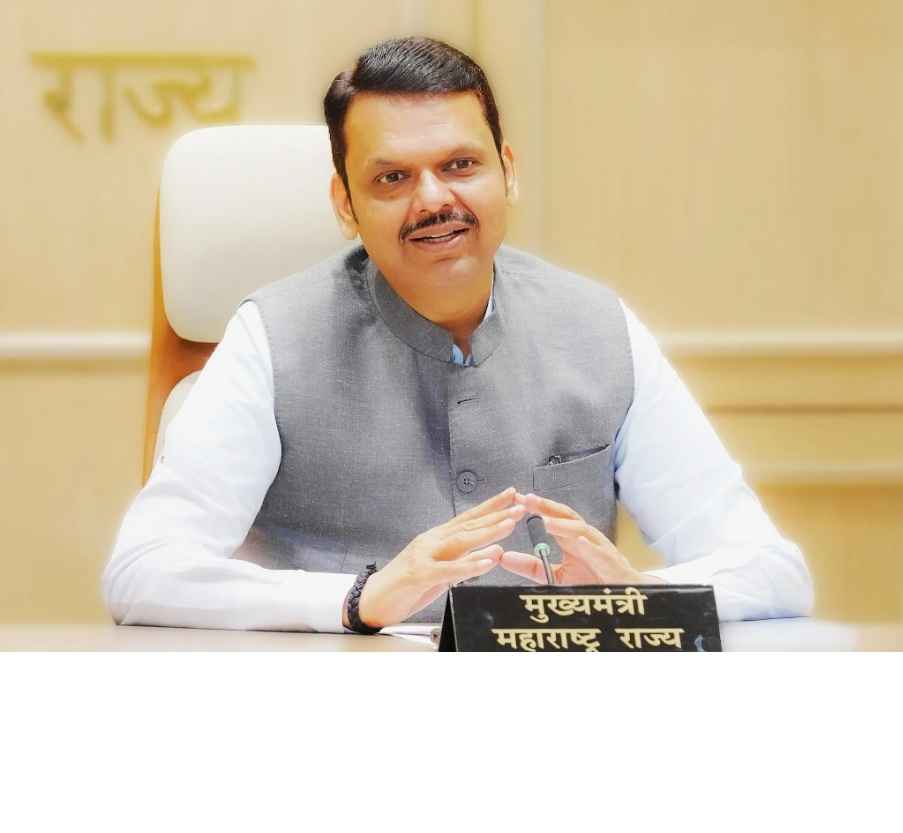
The state government has taken an important step to tackle the solid waste problem that comes with rising urbanisation, and to make cities garbage-free. Chief Minister Devendra Fadnavis has directed the formation of a special task force to speed up the production of compressed biogas (CBG) from waste. He said these projects should be set up quickly at feasible sites under the state’s CBG policy.
A high-level meeting was held at the Chief Minister’s official residence, Varsha, to review the status of garbage-free cities and CBG projects. The meeting discussed in detail how to introduce a new waste management model in the major cities of the state.
Municipal Corporations Set to Save Crores Speaking at the meeting, the Chief Minister said waste disposal has become a major financial burden for local bodies in cities. CBG projects will substantially reduce the money municipal corporations spend on transporting and disposing of waste. The following points were also stressed:
Local coordination: Planning should balance waste collection, land availability, advanced technology and the distance to gas pipelines.
Three-party participation: The implementation method should be fixed through joint participation of local bodies (municipal corporations), energy and oil companies, and experienced private organisations in this field.
Special Focus on Mumbai Metropolitan and Industrial Belts Given the severity of the garbage problem, the meeting emphasised implementing these projects on a priority basis in the Mumbai Metropolitan Region (MMR) and the major industrial belts of Pune:
MMR region: Draw up a concrete plan for Brihanmumbai, Thane, Navi Mumbai, Vasai-Virar, Mira-Bhayandar and Kalyan-Dombivli.
Pune area: Check the feasibility of such projects in the fast-industrialising Hinjewadi IT Park and the Chakan industrial area.
‘Cluster Model’ and the Basis of the Nagpur Pattern During the meeting, the company Keva Green made a presentation on the waste-to-biogas project it successfully ran in Nagpur.
Cluster method: Instead of putting the load on one city, a group of nearby small and large towns can form a cluster and build a joint processing project.
Efficient use of land: If waste is first sorted at the city level and the main processing centre is set up outside the city, pressure on open land inside the city will ease.
Savings on transport costs: If projects are set up close to the main gas pipeline, so the gas can be moved easily, logistics costs will become negligible.